

Tupac Shakur’s Early Life in Baltimore: New Biography Excerpt
The story of Tupac Shakur has been told many times since his tragic death at just 25 following a drive-by shooting in 1996. Yet a life so big and complicated is always ripe for further exploration. Jeff Pearlman’s new biography, Only God Can Judge Me: The Many Lives of Tupac Shakur, is a 400-page deep dive into Shakur’s brief and tumultuous existence, from his childhood in New York City, Baltimore, and the Bay Area to his early brushes with fame, the development of his gangsta rap persona, and his scrapes with the law. While the sweeping narrative may be familiar, the book is chock full of details that will surprise even the most ardent Tupac fans — a consequence of Pearlman’s three-year reporting odyssey, which took him across the country and back again, and saw him speak with nearly 700 people.
The book’s fourth chapter, “Coming to Baltimore,” from which this excerpt is taken, focuses on Tupac’s life at the tender ages between 13 and 15, when he, his mother Afeni, and his sister Set left their hometown of New York for a fresh start. He was an awkward and vulnerable teen in a new city, toggling between his fierce independence — defiance, even — and his desire to fit in. The timeframe marks the emergence of his creative voice, when he began revealing his poetry musings to the wider world and performing as a rapper.
Although nearly forty years have passed since Afeni Shakur and her two children moved to 3955 Greenmount Avenue, in Baltimore’s Pen Lucy neighborhood, on the city’s northeast side, time remains frozen. A small patch of grass before her row house is overgrown and blended with the shattered glass of a broken beer bottle, a Hershey wrapper, two frayed lollipop sticks. The cement staircase appears as cracked now as it was in 1984. The air smells of rust and salt.
“This is Black Baltimore,” Phyllis Cannady, a sixty-three-year-old woman on a nearby porch, tells a white reporter. “Welcome.”
With little money to her name and no particular plan in place, in November 1984 Afeni and her children, Tupac and his half-sister Set, moved into the 1,798-square-foot row house, which was occupied by a cousin, Lisa, and her son, Jamal — both of whom moved out within a matter of weeks.
Were one to read the day’s sparkly travel brochures, he would learn of a magical municipality featuring the splendor of Inner Harbor, the excitement of Cal Ripken Jr. and Baltimore Orioles baseball, the deliciousness of steamed crabs. Yet to be white and wealthy is to know an upper-crust Baltimore that never existed to the denizens of Greenmount Avenue. All one needs to do is scan through copies of the Baltimore Afro-American, the weekly Black newspaper of record at the time, to understand. With rare exception, the articles called for people to fight drug addiction, escape homelessness, embrace Jesus. The headlines bled trauma — shootout at social services and no suspects yet in the Pimlico Five executions and grocers in city county cited for food stamp violations. Beneath two Baltimores, the columnist R. B. Jones once wrote, “There has [sic] always been two Baltimores. That is an irrefutable fact and people get upset when they hear it. But it’s the truth.”
The three Shakurs entered their new home for the first time sight unseen — and it was not a tableau to behold. The place was a dump, with paint chipping from the ceilings, floors slanted at strange angles, rodent droppings situated along the floorboards, and paper-thin walls that welcomed in bitter winter air. There was no phone. No heating unit. The pipes froze. Once Lisa and Jamal moved out, Tupac slept mattress to floor in a coffin-sized bedroom, while his mother and sister laid out their mattresses and box springs in the dining room.
“There was nothing good about that home,” said Set Shakur. “It was disgusting from the start. Everything in our lives was traumatic. That move — trauma. All trauma.” In particular, she recalled the rats — toaster-sized creatures who entered and exited the kitchen through gaping holes in the floor. Years later, Set could still hear the haunting nighttime sounds of monstrous vermin tiptoeing through the house. “Those rats ate our food,” she recalled. “And once they got in it, we couldn’t touch it.”
To his credit, Tupac made his little room work. Before leaving, Jamal had covered the cement floor with a greenish-blue Astroturf. The walls were paper-like plywood, and Tupac decorated them with images of his heroes — Bruce Lee, LL Cool J, New Edition, Sheila E. “In every corner,” wrote Tupac biographer Staci Robinson, “were cups half-filled with sunflower-seed shells, a habit he had developed shortly before they left New York.” By near any measure, the quarters were condemnable. Yet for a kid who had never had a room to himself (or, really, anything to himself), there was magic to it. It was a dump. His dump.
As Afeni set about finding a job, Tupac entered yet another school — he enrolled as an eighth grader at Roland Park Middle School three months after the academic year began. Located three miles away on Roland Avenue, the school was known as a “citywide magnet,” which meant students from across Baltimore could attend. Approximately six hundred young teens composed Tupac’s grade, and classes were capped at thirty per room. “It was a really good school,” recalled Donyale Smith, Tupac’s classmate. “We had Black kids, Asian kids, white kids, Hispanic kids. It was definitely more of a mix than most kids were probably used to.”
That diversity, however, was limited. Homeroom placement was designated by test scores, and Smith rightly recalled that her homeroom class with Tupac was filled by twenty-eight Black students — and a gawky white kid named William Yates. “I hate to say it,” she said, “but a lot of the kids I was with were always in trouble.”
“At that moment I felt terrible, because I realized he was embarrassed of his life.”
Brian Gault, a friend from Dunbar High School
“It was a lot of wealthy white kids who had all the advantages,” added Shawna McCoy, a classmate. “Every year they’d come to the poor neighborhoods and take the best and brightest of us Black kids. Then they’d put us all in a class together.”
Tupac arrived in November, and immediately stood out. His name, to begin with, was unusual. What the heck was a Too Pack? But it was more than that. Though later in life he embodied a large persona, at Roland Park he was a runt. “Tiny,” recalled Michelle Carter, a classmate. “With feet that pointed out. He literally walked like a duck.” He also smelled bad — a kid in need of a deodorant stick. “A lot of the students used to look at him like being a bum,” Carter said. “You could tell he didn’t have much money. He didn’t have stylish clothing.” Tupac owned two pairs of thrift-store-purchased pants — Lee jeans and black suit pants. Both were too long. He styled his hair in a mangled high-top fade, but it was sloppy and slanted, with no true definition. “And his teeth were really bad,” said Carter. “Kinda gross.”
Tupac wore braces. But not normal, quality orthodontist-approved braces. These were more like bargain-basement metal plates that filled a portion of his mouth. His teeth were spread apart and stained, Carter recalled, almost as if someone had painted them to match a glass of iced coffee. At an age when boys start liking girls and girls start liking boys, nobody showed the slightest bit of interest in Tupac. He asked multiple classmates out, and was summarily rejected. “Girls laughed about him,” Carter said. “I didn’t. He was nice. But the smell, the teeth, no money, so small. Tupac was no catch, I can tell you that.”
When he wasn’t being ridiculed and ignored, Tupac was writing. Always writing. Classmates remember him walking through the hallways carrying a notepad, jotting down words and thoughts with a blue Bic pen. When asked, he told people he was creating a play for his future as an actor (according to an old Roland Park Middle School library record, in February 1985 Tupac twice took out The Young Actors’ Workbook, by Judith Roberts Seto). There was no reason to believe him. Or not believe him. He was the quiet new smelly kid with the screwy name. He was marginalized.
Then, one day during Mrs. Gee’s math class, Tupac Shakur emerged. Carter was sitting in her chair, listening to a lesson, when Octavius Johnson, a classmate who had a crush on her, started to fire off insults. It was adolescent jilted lover stuff — “Why are you being a bitch? Stop being such a bitch” — but the undersized, stained-gap-toothed kid heard enough.
“Yo, don’t talk to her like that!” he barked. “Don’t call her that!”
Johnson — bigger, presumably stronger — asked Tupac what he planned on doing about it.
“Well,” Tupac said, “how about I fuck you up?”
Johnson opened his mouth to laugh, and Tupac shocked everyone in attendance by firing off a left fist into his teeth. Down went Johnson.
“Tupac beat him up,” Carter said. “Beat him up good. I knew Tupac liked me, because he told me once. But . . . I dunno. I think he liked every girl at one time or another.
“But I can always say Tupac Shakur punched someone in my defense. That’s pretty cool.”
AS HE NAVIGATED his way through life, Tupac Shakur rarely spoke of his brief time at Roland Park. It was seven largely miserable months, and when his last day wrapped, he left and refused to look back.
And yet, through the brown teeth and the raggedy clothing and the indifference of the opposite sex, Tupac found someone within the long gray hallways whose presence would prove life-changing. Like Tupac, Dana “Mouse” Smith was an eighth grader in Mrs. Gee’s homeroom class. Also like Tupac, he was a creative soul, always writing in a notepad, always jotting down thoughts and observations.
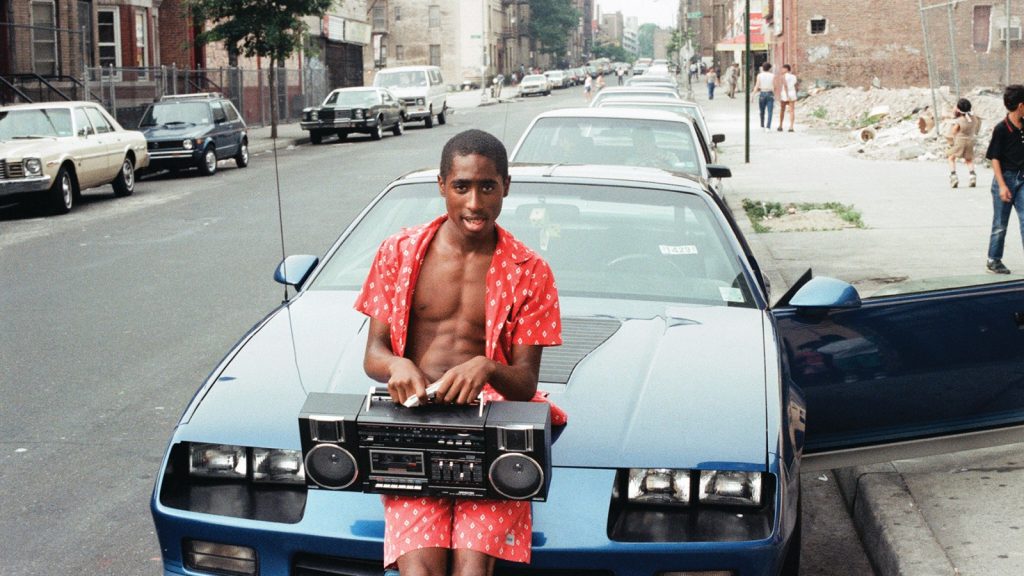
When he wasn’t at school, Tupac could be found in his bedroom, on his mattress, listening to rap, studying rap, writing rap. A boom box he’d long ago received remained his prized possession, and the buttons were smoothed down from Tupac pressing play, then stop, then rewind, then play, then stop and rewind and play again. He didn’t enjoy academics, but he loved studying music.
Although he thought of himself, rap-wise, as MC New York, with the move south came the adaptation of a second hip-hop name: Casanova Kid. It was unintentional irony — Tupac Shakur was anything but a Casanova. Yet, as a fan of LL Cool J, the ultimate hip-hop ladies’ man, Tupac liked the idea of shape-shifting and becoming something he wasn’t. If, in real life, he was the impoverished, gap-toothed son of a drug addict, on paper he could be anything he chose. Music, he learned, was the ultimate mental vacation.
At Roland Park, Tupac’s English teacher was a stern woman named Thomasina Porter. He and Carter sat next to one another in the class, and bonded over their disdain for the instructor. “She was mean just to be mean,” Carter recalled. “She liked embarrassing students.” As an assignment, Porter had all students write a poem, with the knowledge that, come Monday, they’d be reading it aloud to the class. One by one, with sweaty palms and cracking adolescent voices, the pupils rose and read.
When it was his turn, Tupac stood. His poem was an ode to the joy of summer, only instead of reading it, he rapped it. Mouse, sitting a few rows up, was gobsmacked. “It was like a rap, but it was a poem,” he recalled. “The poem was nothing like anybody had heard before. We looked at this guy, you know, with the flop-sided hairdo and half braces. And everybody just looked at him a little bit different after that.”
Later that day, while riding the bus back home, Mouse and Tupac got to talking for the first time. Unlike the newcomer, whose approach to music was strictly lyrical, Mouse practiced the art of beatboxing, which in the moment was being perfected and mainstreamed by Darren “The Human Beat Box” Robinson of the hip-hop trio the Fat Boys. Tupac had absorbed endless hours of music, but never before had he been in the presence of a peer who could create so many beeps, blurps, and murmurs. The boys bonded quickly (Mouse wisely insisted Tupac stick with MC New York, not Casanova), and were soon spending much of their free time together. Though neither teen was even remotely wealthy, Mouse’s life was blanketed with a security Tupac’s lacked. He lived in a three-bedroom apartment with two uncles, a sister, his mother, his aunt, and two grandparents. And even though money was tight, Mouse’s grandmother made sure he attended school in the latest fashions.
With no spare dough for musical development, Tupac and Mouse relied on ingenuity. In a small park near their homes in the Pen Lucy neighborhood sat a large plastic bubble-like structure. Initially designed as a play place for tots, it had been overtaken by the homeless and used as a bathroom. “It smelled like piss,” Mouse recalled. “But the acoustics were crazy. You couldn’t get acoustics like that nowhere.” Armed with their boom boxes and cassette tapes, the boys braved the stench and recorded songs. Mouse knew his pal had talent.
Unlike so many of the other students at Roland Park, Mouse didn’t sit in judgment of Tupac. He saw the holes in the kitchen and didn’t care. He was well aware of Tupac’s financial situation, and didn’t care. Tupac’s home life was a disaster — on the times people came across Afeni, she was often smoking a Newport and/or high from the latest hit. “Afeni was cracked out in Baltimore,” said Yaasmyn Fula, her longtime friend. “Sometimes I’d come down from New York, get the kids for the weekend, then bring them back.” Afeni wanted to get clean. Tried to get clean. Aspired to straighten out. “Afeni was a very complex person,” said Watani Tyehimba, another longtime family friend. “She would give you the shirt off her back, but she’d also take your shirt.” Afeni enrolled in a program to learn data entry on computers, then took a temporary, low-paying job entering information for a law firm. Despite pride and hubris begging her otherwise, for the first time she filed for welfare and food stamps. At one juncture she sent Tupac to a pawnshop to sell off some gold earrings, then used the money to buy meat and a few bags of potatoes. There was no other choice — her children needed to eat.
“Their lives,” said Fula, “were without hope.”
For Tupac, music was an escape from it all. He needed it desperately.
THEY CALLED THEMSELVES the East-Side Crew.
And while it was hardly original (Tupac and Mouse were from the northeast side of Baltimore), the name made perfect 1985 sense.
This was a year when rap music was heavily into crews. There was 2 Live Crew. Doug E. Fresh and the Get Fresh Crew. The Juice Crew. Tuff Crew. Find a multi-person hip-hip outfit, odds were you’d find yourself a crew.
So, yeah, long before Tupac Shakur emerged as an international icon, he was one-third (with Mouse and a boy named Kevin McLeary) of the East-Side Crew, preparing to make its professional (i.e., in front of people with actual ears) musical debut on a February night in 1985, at the Cherry Hill Recreation Center in South Baltimore.
“I’ve got two goals. I wanna put some damn heat in my house, and I wanna be able to afford studio time.”
Tupac Shakur, according to Brian Gault
All these decades later, the beforehand details are blurry, but the event itself is not. The headliner would be a Brooklyn-based Jamaican named Kurtis el Khaleel, whose song “Fresh Is the Word” was about to land itself on the Billboard Hot Dance Single Sales chart. Up-and-comer status gifted el Khaleel’s group, Mantronix, with the glory of a four-hundred-dollar gig at the rec center, home to youth basketball games, baton-twirling competitions, after-school child care, and — on occasion — community concerts.
For Tupac and Mouse, opportunity was opportunity. This wasn’t about money (there was none) or record deals (there would be none). It was about the chance.
It went well. They played five songs, and, Mouse recalled years later, “We really didn’t get any boos or nothing.” They sounded professional, moved stiffly, received enough applause to feel good about themselves. Afterward, they were approached by Virgil Simms, Mantronix’s manager and a Jive Records A&R executive, who praised the teens for their poise. He expressed some light interest in signing them to a management deal, but — according to another childhood friend, Darrin Bastfield — Afeni was resolute that her thirteen-year-old son would focus on school, not a music career.
“Tupac,” Mouse recalled, “cried about that.”
IN SEPTEMBER OF 1985, Tupac enrolled for his freshman year of high school. He was now fourteen, but saddled with tragic dental work and an Olive Oyl physique. “Scrawny dude,” said Laray Rose, a classmate. His new stomping ground was Paul Laurence Dunbar High, located a half-hour city bus ride away. In Baltimore’s pre-desegregation days, Dunbar had been one of two Black high schools, and it maintained a sterling reputation well into the 1980s. Much like Roland Park, Dunbar drew students from myriad neighborhoods. It was fairly big (approximately 1,300 total students), Black (there were no whites in Tupac’s freshman class of 239), and well regarded for its affiliation with the around-the-corner Johns Hopkins Medical Center (Dunbar had a top-shelf nursing apprenticeship program) and its nationally praised basketball program. “It was known as one of the best academic institutions for the Black students of Baltimore,” said Alejandro Danois, author of The Boys of Dunbar. “Dunbar served as a hub for the community.”
As had been the case at the start of eighth grade, Tupac showed up at Dunbar knowing nobody. Mouse, his best (and only) close friend, attended Northern High School. Tupac was on his own.
On the first day of school, Dunbar’s freshmen were told to wait outside in a single-file line, and enter the building one by one. “Tupac was standing behind me,” recalled Devena Allen, a classmate. “I looked down and I was like, Why is he standing like that? He had these crazy feet that pointed in weird angles.”
Allen was far from bashful.
“Boy, your feet are crooked,” she said.
Tupac looked down. He was wearing pin-striped Lee jeans and brown thrift-store-purchased dress shoes.
“What’s your name?” she asked.
“Tupac Shakur,” he replied.
“Tupac Shakur?” she said. “What kind of name is that?”
“My mother was a Black Panther,” he explained. “It means strong and powerful warrior.” (That’s not exactly what it means. But close enough.)
Tupac said his family had recently relocated from New York, and that he didn’t want to be there.
“I don’t care about this school,” he said. “It doesn’t mean shit to me.”
Over the next several weeks, he made sure to let everyone know he had no desire to attend Dunbar. He also created a story explaining why the Shakurs came to Baltimore. According to young Tupac, the violence of New York ran them out of town — “He told me someone got shot in his house up in New York and died,” recalled Steven Gregory, a classmate. “So they escaped to Baltimore.”
It was not true. But if his classmates figured him to be a street-hardened kid out of the Big Apple, who did it hurt? It certainly wasn’t the first time Tupac created a narrative for himself, and it wouldn’t be the last. Strolling from class to class, he introduced himself as “MC New York,” and bragged not merely of his work as part of the East-Side Crew, but as an inevitable future star. “He would say all the time that he was gonna be famous,” said Gregory. “‘I’m gonna be famous, bro! You’re gonna remember me, bro!’ It wasn’t a guess to him. He was certain of it.”
Tupac lived multiple rap existences. Outside of school, he could be found alongside Mouse, working on new rhymes, new beats, trying to uncover opportunities to perform. That October, he spotted a flyer that read, in bold black lettering, rap contest! Baltimore’s Enoch Pratt Free Library was celebrating its one hundredth anniversary with a special competition — write and perform the best library-themed rap song, win $100!
In the hallways of Baltimore School for the Arts
Jojo Perryman
As soon as he heard of the opportunity, Tupac hunkered down in his bedroom, lined notebook paper before him, black pen in hand. Beneath the title library rap, he wrote away:
Because reading and writing are important to me
That’s why I visit the Pratt Library
It took the fourteen-year-old no more than thirty minutes. He submitted “Library Rap” a day later, survived the semifinals, and was invited to perform the song at the Pratt Library’s Pennsylvania Avenue branch the following week. With a hundred or so onlookers seated in chairs positioned in a semicircle in the library lobby, the contestants took turns busting rhymes. Some were good. Most were bad. A few were awful. The East-Side Crew — Tupac, Mouse, and McLeary — reached the finals, where they squared off against a platoon of adorable preteen girls whose song was simple and unimaginative and…
“Library Rap” took second.
It was a gut punch. Mouse handled the setback well. His friend, however, did not.
“Tupac,” he recalled, “wanted to stop rapping forever.”
AS A STUDENT, Tupac was forgettable. His grades were in the Cs and high Ds, and he missed a good number of classes. During first-period homeroom, he picked out a chair in the back row, right next to Brian Gault, a fellow freshman. Within days, the two figured out that if they left campus for lunch (students were granted this luxury), school officials never updated attendance rolls to mark their return. “That created a monster as far as Tupac and some of the stuff we did,” said Gault. “We left and just never came back.” Because Tupac lived closer to Dunbar than Gault, the two would ditch campus, take the bus to Greenmount Avenue, sit on the front porch, and smoke weed. One frigid day, Gault requested to use the bathroom.
“Fuck,” Tupac replied. “Why didn’t you go when we passed a store?”
“It didn’t dawn on me then,” he said. “But I have to go now.”
Tupac scowled at his friend. “Fuck,” he said. “Come on.”
Tupac unlocked the front door and poked his head inside. Nobody was home. “Go on,” he said to Gault. “Bathroom is in the corner.”
He entered — and what hit him wasn’t the mess (it was messy) or the stench (it smelled terrible). No, it was the temperature. If it was thirty degrees outside, it had to be ten degrees inside. “It was way colder in there than it was in the fresh air,” Gault said. “Fucking unbearable. Humans shouldn’t have lived there. And, at that moment, I felt terrible, because I realized he was embarrassed of his life.”
“I have a poem for everything. Try me.”
Tupac Shakur, according to Brian Gault
Oftentimes, Tupac and Gault wound up whiling away lunch (and beyond) at the Old Town Mall, a run-down shopping center two hops and a skip from Dunbar. They spent hours inside the arcade, working their way up from Glass Joe and Piston Hurricane in Punch-Out!! Tupac loved the arcade — the smells, the sounds, the lights. It felt life-affirming. One day, in between games, he nudged Gault and said: “I’ve got two goals. Just two. I wanna put some damn heat in my house, and I wanna be able to afford studio time.”
Gault was surprised. “Studio time?” he asked.
“Man, I would live in the studio,” Tupac said. “I don’t care if it’s a fucking shed out back. I would never, ever leave.”
Though he was only fourteen, Gault’s heart broke for his friend. Like Mouse, he didn’t come from wealth. But Gault always knew there’d be food on the table and heat making winter nights tolerable. “Tupac’s life was awful,” he said. “There were no comforts.” Sometimes, Tupac stared longingly at the mall’s store windows, knowing he could afford none of it. Warm winter jackets taunted him. A six-pack of socks, a satchel of clean Fruit of the Loom underwear, cozy pajamas — nothing was within reach. Even shoppers nibbling on a slice of pizza seemed to be mocking him. He couldn’t afford it.
Gault was an intermediary for a bunch of neighborhood guys who sold drugs, and he asked Tupac if he’d like to make some extra money slinging product. “I didn’t love the idea,” Gault said. “But he was so poor.”
“Oh, fuck, yeah!” Tupac said. “Let’s go!”
Gault told Tupac he would hook him up with the lightest drug possible (marijuana), but that he could not, under any circumstances, deal from the corners of Greenmount.
“Why not?” Tupac asked.
“Bro,” Gault replied, “you’re not from around here and you’re not very street-smart. Those dudes on your block will never let you get away with it. They’ll fuck you up and leave you dead.”
“I ain’t afraid of them,” Tupac fired back.
Gault wasn’t having it. Tupac talked tough. But it wasn’t real machismo. It was pretend. “I’m not hooking you up to see you get killed,” Gault said. “Seriously, you’re not that guy.”
Over the next couple of weeks, Gault connected Tupac with the bare minimum amount of weed — roughly twenty-five dollars’ worth per week. He was inarguably the worst drug dealer in the history of Maryland — a state founded in 1632. He didn’t know how to approach people, or when. He wasn’t sure how to charge customers, or collect. In two months as a dealer, he made less than a hundred dollars. “He also got some extra work sweeping the ground out front of a convenience store,” Gault recalled. “Cigarette butts and stuff. Which was a good thing, because his future wasn’t on the street corner.”
Gault was not musically inclined, but he felt he knew talent when he saw it. And what he saw in his new friend was brilliance. During his time at Dunbar, Tupac arrived most mornings with three thick binders jammed with loose-leaf paper. He’d caress them as one does a newborn. One day Gault asked, “Pac, what is all this shit?”
“Poetry,” he replied. “I have a poem for everything.”
“Bullshit,” Gault said.
“Try me,” Tupac replied.
“And it was crazy, because I’d say ‘Valentine’s Day,’ and Tupac would go through his binders and pull out a beautiful Valentine’s Day poem,” said Gault. “I’d say, ‘Death,’ and there’d be a poem about dying. And it wasn’t rap. It was poetry. But I don’t think Tupac necessarily saw rap and poetry as different entities. He was a poet, therefore he was a rapper. He was a rapper, therefore he was a poet.”
When he was hanging with Mouse, Tupac was part of the East-Side Crew. At Dunbar, he found different guys to perform with. Though rap had yet to fully break through to mainstream America, inside his urban high school it was the music of youth. From Public Enemy and Salt-N-Pepa to Run-DMC and Kool Moe Dee, hip-hop reigned.
Tupac formed a particular kinship with James Moore, a fellow freshman whom everyone at Dunbar knew as “Chico.” Born into poverty in the shadow of old Memorial Stadium, Chico had light mocha skin, greenish-brown eyes, and a tail that dangled from the back of his head. “He looked just like J. T. Taylor from Kool and the Gang,” Laray Rose, a classmate, said. “Just smaller.” On those days when he didn’t cut out for lunch, Tupac would find a chair inside the cafeteria alongside Rose and Moore. “I had this really nervous habit of making beats on the table,” Rose recalled. “Just with my hands — Bop! Bop! Pa-bop! Bop! We’d be laughing about it, and then Tupac would start rapping over it. Then Chico would start rapping over it, too. Everything came together.”
Rose, Chico, and Tupac made their official debut at the annual Dunbar talent show, a staple event held in the school auditorium that brought out singers and rappers, dancers and actors, jugglers and ventriloquists. “It was the thing,” said Timothy Simon, a classmate. “If you wanted to express yourself, this was the place.” As freshmen, Rose, Chico, and Tupac were relative unknowns. Newcomers tended to watch the show, not participate. “Ninth grade, you’re supposed to keep quiet,” said Gault. “Not Pac.” Most of the other acts featured students dressed up in costumes or snazzy duds. Tupac wore the same outfit he’d had on at school during the day — Lee jeans, black shirt. Though classmates don’t remember the precise song, many recall Tupac grabbing the microphone, stepping forward, “and owning it,” said Yolando Moody, a freshman. “I knew he liked rap and I knew he wanted to rap. But I didn’t know he could rap. It shocked me.”
The trio won (“No money,” said Rose. “Just glory”), and proceeded to perform three or four more times at small house parties.
Mostly, Tupac and his friends kicked back, smoked weed, talked shit, and dreamed of bigger things. One day, he and Simon were sitting on the porch, sharing a spliff. They could spend hours ruminating on all topics from MCs to movie stars to Dunbar’s coed hotness.
“We’re talking, and Tupac gets real serious,” recalled Simon. “He told me he had a dream the night before that he was doing a show and fifty thousand people were watching. He said it was the greatest dream ever. The kind you don’t want to end.”
Tupac, Simon said, took a long drag. “You think it can happen?” he asked his friend.
Simon was no expert on the process of making it big. He was, like Tupac, a poor Black teenager in Baltimore just trying to navigate high school. But he lived for rap, and listening to Tupac bust rhymes felt bigger than Greenmount, bigger than Dunbar, bigger than Baltimore.
“Bro,” he said, “if anyone around here can do it, it’s you.”
Excerpted from the book ONLY GOD CAN JUDGE ME by Jeff Pearlman, to be published Oct. 21. Copyright © 2025 by Jeff Pearlman. From Mariner Books, an imprint of HarperCollins. Reprinted by permission.
BTS Star on Solo Hits, ‘They Don’t Know ‘Bout Us.”
A sk all of BTS which member can hit the highest notes, and they’ll point to...
‘Arirang,’ Finding Hope, Writing About Romance
J -Hope is “softly spoken and kind of elegant,” says one of his Arirang collaborators,...
BTS Rapper on Making ‘Arirang,’ Hip-Hop, What’s Next
T he story goes that Suga, born Min Yoongi, got his nickname from the phrase “shooting...
Rock Influence, Solo Work, Coldplay, Touring With BTS
A mong the things that Jin, born Kim Seokjin, loves the most in this world are...