
Does Paula Deen Deserve a Second Chance? A New Doc Says Yes
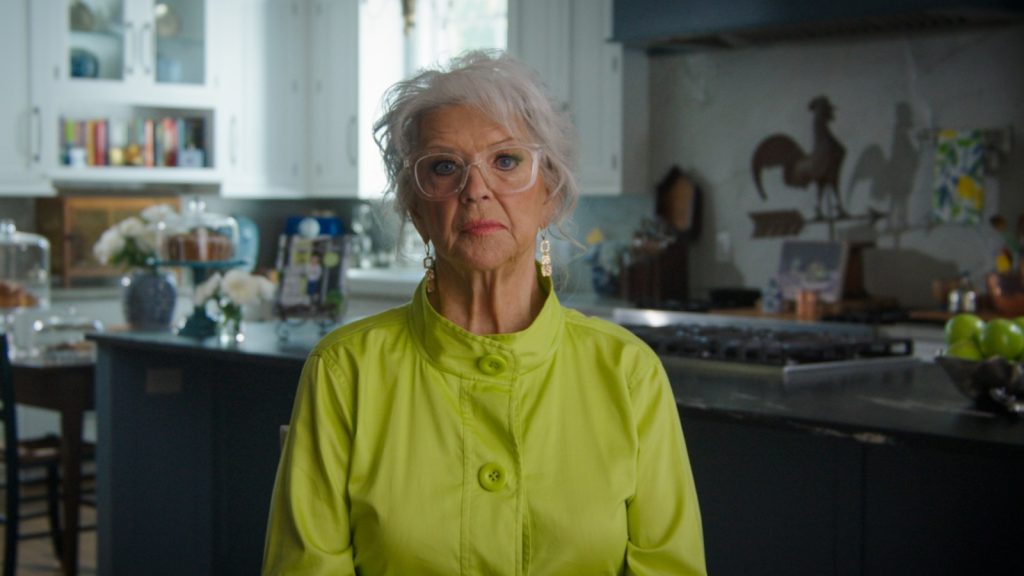
She always cut such a distinctive figure, with the Dolly Parton hairdo and those Technicolor-blue eyes and that smile a yard wide, emanating a vibe that suggested biscuits were baking in the oven and y’all should come on in now. A single mother with two boys who opened up a restaurant in Savannah, Georgia, and stumbled into becoming a TV star with a Southern-comfort-food empire, Paula Deen represented the bootstrap fairy tale of the American Dream: Work hard, keep your chin up, maximize your market value, and you too can become friends with Oprah and Michelle Obama. “Her brand is excess without guilt,” Anthony Bourdain once noted of Deen’s across-the-board appeal. It was one of the few kind things he ever said about her.
The Food Network icon then became an unwilling representative of a lot of other, extremely American qualities: an inability to reckon with our past, a deep-rooted social hypocrisy, a jus’ folks naivete that borders on pathological, a need to turn celebrities into both deities and martyrs. Deen resembled a Southern-fried everygrandma. Except it wasn’t how she looked so much as what she said, and the way in which her every attempt to course correct drove her career deeper into a ditch, that turned her into a public enemy and a cautionary tale. The first thing you think of now when you think of Deen isn’t chicken Divan. It’s a six-letter slur.
No one makes a documentary on someone like Deen, especially in the current political climate, and names it Canceled by accident. So let’s acknowledge that filmmaker Billy Corben (Cocaine Cowboys) is after more than just restarting the conversation around his subject. Premiering at the Toronto International Film Festival, Canceled: The Paula Deen Story knows that it’s tackling not just the former TV host’s faux pas but a larger reckoning that falls somewhere between Confederate monuments and contempt around pronouns in terms of controversy-bait. It’s still interested in Deen’s story, giving Paula and her sons, Bobby and Jamie, plenty of screen time to talk about their hardscrabble roots, their mom’s once-chronic anxiety attacks, the fraught atmosphere when her husband drank, the early successes. Gordon Elliott, the former-journalist-turned-producer who helped shepherd Deen into the spotlight, offers a running commentary on how he brought her to someone’s house unannounced in Georgia as a TV-show gimmick, and Deen proceeded to unleash a camera-ready charm offensive. New York beckoned. Fame was inevitable. There will be butter.
But the doc desperately wants to wade nose-deep into the culture wars and specifically treat Deen’s public pariah-hood as a sort of case study, and this is where you get the sinking feeling that this movie is biting off more than it can chew. And while Corben’s portrait doesn’t ignore Deen’s other missteps and metastasized bad decisions — such as keeping her diabetes diagnosis secret and then striking a deal to pitch medicine for it, or the way she handled complaints about her brother’s behavior at one of her restaurants — there’s a lot more screen time devoted to her admission to using “the n-word” and the subsequent fallout. Should you have forgotten the details: Deen was being sued by a former employee. During her testimony, she asked whether she’d ever used that racial epithet. She answered, “Of course I have.” A shitstorm ensued. Deen tried to do damage control. It did not, um, go well.
Corben lets Deen weigh in on all of this, along with her sons, Elliott, and several other friends and colleagues. He also gives food critic and historian Michael W. Twitty a platform to offer counterpoints and context (if you have not read his “An Open Letter to Paula Dean” blog post, we highly encourage you to do so ASAP). The doc makes a case that she was given a raw deal, that her lawyer was simply not up to the task of handling her defense, and that she never should have been asked about her use of such terms in relation to the lawsuit at all. But it’s the questions that are left unasked and the things that are curiously left unsaid that make you wonder what the doc is trying to accomplish, exactly.
For example, Deen is asked: “When was the last time you used the word?” She guessed it would have been when a gun was put to her head during a bank robbery. The person holding the weapon was Black. No instances of previous utterances are inquired about. Nor how she feels about the usage of such words. Nor, for that matter, whether she felt that saying such a horrific word was somehow justified because she was in a stressful situation — which, no, it still isn’t, but what does she think? Does she understand why this admission caused such an uproar? Why, say, some people felt that it might be expected that a woman of a certain age who grew up in a pre-Civil Rights era would be comfortable saying it (“Of course I have”), and others were deeply offended? Or why this situation remains indicative of bigger issues plaguing our country, then and now?
This is just the tip of the iceberg, and yet Canceled has a problem navigating even just that tip. To its credit, the doc does not claim to have easy answers to deeply complicated questions. Yet it doesn’t seem to want to go deep enough to ponder the reasons behind the outrage, or the cultural shifts that have weaponized both sides of the cancellation argument now, even as it leans into those same issues to fan the flames of interest. The questions it does seem invested in are: Does Paula Deen deserve forgiveness? Was she unfairly made to pay for a nation’s sins and the way we still can’t seem to get a handle on systematic racism and the vocabulary around it?
Then it gives the equivalent of a shrug. Really? Is this what we’re supposed to take away from this anatomy-of-a-scandal diatribe that can’t bother to anatomize the scandal or what surrounds it all? After all is said and done, Deen’s story still feels slightly uncooked. And you, the viewer, get the distinct sensation that you’ve been buttered up to think it’s saying something of significance instead of reheating tabloid leftovers and calling it food for thought.
Long-Shelved ‘The Savant’ Finally Arriving on Apple TV This Summer
Apple TV‘s long-shelved series The Savant, postponed after the Charlie Kirk assassination,...
A Forgotten ’80s NYC Movie Is Back, Scuzzier and Better Than Ever
Once upon a time in the Lower East Side… a writer-director frustrated with the Hollywood...
‘The Pitt’ Season 2 Is About the America We’re Stuck In
In the late 1960s, Paddy Chayefsky pitched CBS on a TV show called The Hospital. According...
Baby Yoda and Pedro Pascal Are Back
Pedro Pascal returns as the masked bounty hunter in the Jon Favreau-directed film set...