
Breaking Down It Ends With Us Legal Saga
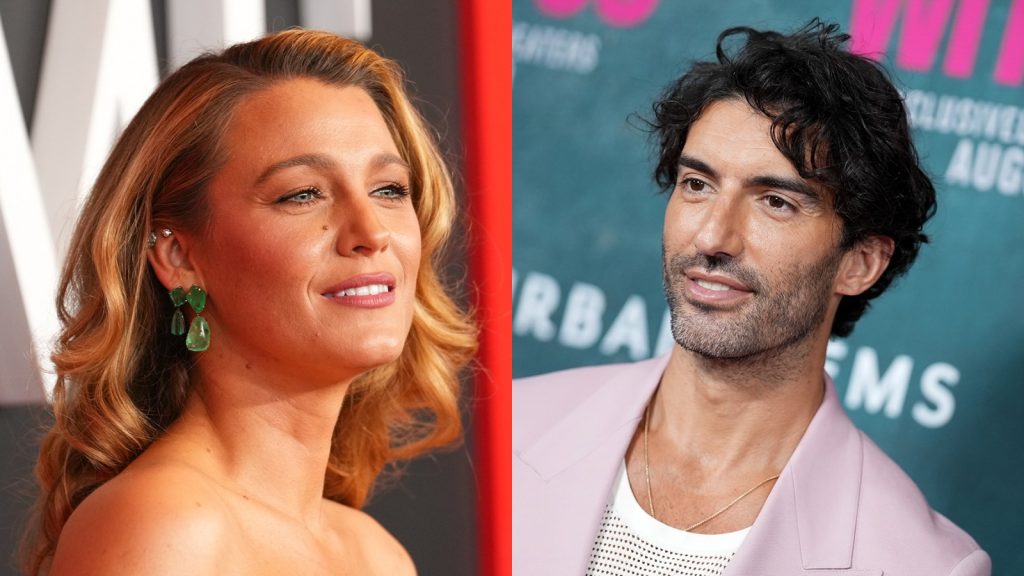
For almost a year now, I’ve had to dedicate an unusually large amount of brain space to two figures who, to be frank, had previously occupied next to none: Blake Lively and Justin Baldoni.
As someone who both uses the internet and reads the news (I’m a rare unicorn, I know), details of the ongoing feud between the two actors have been practically inescapable. Ever since rumors of disharmony between the pair began bubbling up last summer during the launch of their movie It Ends With Us, people on TikTok, in the tabloids, and even at the New York Times have been obsessively chronicling every new detail of what is now an incredibly messy legal spat. One shocking development came in June when a judge tossed out a $400 million lawsuit Baldoni had filed against Lively and her husband, Ryan Reynolds. But another came months later when news emerged that Taylor Swift might be deposed as part of the legal battle. Still, amid all the claims and counterclaims, it’s been dizzying to try to keep up with what’s going on — or understand why it’s occupying so much media real estate.
Yet while the saga is complex, it’s also revealed a lot about the behind-the-scenes machinations of Hollywood, and the central influence publicists and lawyers hold in the industry. Perhaps most interestingly, though, it’s also made me think a lot about the ways in which celebrity image is crafted in the public eye, as well as where things currently stand almost eight years after the #MeToo movement exploded.
But to make sense of it all, we need to first talk about Blake Lively…
I think it’s fair to say that the public fascination with the case wouldn’t be what it is were it not for it involving Lively, 37, who has long been a figure in the lives of Millennial women (and gay men, like yours truly) thanks to her early roles in The Sisterhood of the Traveling Pants movies and, of course, Gossip Girl. Because of her glamorous and scandalous It Girl part in the CW series, in particular, Lively immediately became fodder for the tabloids. They greedily chronicled her relationships with on-screen boyfriend Penn Badgley and then Green Lantern costar Reynolds, whom she married (infamously on a plantation) in 2012.
But her subsequent projects left much to be desired. Lively became mostly famous for, well, being Blake Lively: tall, slender, beautiful, and suspiciously perfect — a patron saint for the Instagram age. Goop-pilled, she launched products and websites, but her creative projects felt pedestrian and uninspiring. Around 2016, she was more famous for being in Taylor Swift’s Squad, appearing at the Met Gala, and the “relatable” ways she and Reynolds would lovingly troll one another on social media than she was for any recent films or TV work. (I’d argue the only really exciting thing she’s done in the last decade is 2018’s A Simple Favor because she actively leaned into parodying her “perfect” public image).
All of which is to say, much of Lively’s fame has been built up around the public image she’s carefully crafted for herself — which, it turns out, is a dangerous way to have a career in Hollywood because it leaves you vulnerable to a public keen to take a look under the hood.
Which brings us to Justin Baldoni…
Prior to *gestures wildly* all this, Baldoni, 41, was most famous for playing the hearthrob lead in the CW’s telenovela-inspired Jane The Virgin. After the series wrapped in 2019, he began directing sappy feature films — Five Feet Apart (2019) and Clouds (2020), both of which oddly feature characters navigating love while battling serious health problems — but much of his public image was being built around him positioning himself as an enemy of toxic masculinity. In 2017, he launched an online talk show in this vein, The Men’s Room, which was followed by a book and podcast. Despite these efforts, Baldoni somehow always had the air of someone trying a little too hard to be an #Ally, as if he were Nev Schulman declaring, “This elevator is abuse free.” Just like with Lively, people had an urge to know if it was all an act.
And now on to the final piece of the puzzle, It Ends With Us…
In 2019, Baldoni’s production company, Wayfarer Studios, acquired the rights to It Ends With Us, the best-selling 2016 novel by Colleen Hoover, which at that point had sold over a million copies and been translated into 20 languages. The book further exploded in popularity in 2021 thanks to viral tearful videos on TikTok, which helped send it to the top of the New York Times Best Seller list. In short, it’s beloved by many fans, which meant a film adaptation was always going to get a lot of attention.
It Ends With Us tells the story of a Boston florist named — wait for it — Lily Bloom (Lively), her abusive relationship with neurosurgeon Ryle Kincaid (Baldoni, who also directed the movie), and her reconnection with Atlas Corrigan (Brandon Sklenar), the boyfriend she had as a teenager who helped her deal with her abusive father.
It took a few years to get production started in 2023 — only for things to be halted for several months due to strikes by the WGA and SAG-AFTRA. It was finally released in August 2024, but…
…the wheels started to fall off before it even hit cinemas
The rollout to the movie’s release was, scientifically speaking, a clusterfuck. On TikTok, keen-eyed observers began obsessively parsing the film’s publicity tour like they were Charlie in that one conspiracy meme from It’s Always Sunny in Philadelphia. Why were Baldoni and Lively never pictured together? Or even apparently in the same place at the same time? Why did Baldoni follow all his castmates on Instagram, only for none of them to follow him back? Why was Baldoni promoting the film as a somber exploration of domestic violence, while Lively seemed keener to lean into the romance and flowers of it all? And why was she promoting her alcohol and haircare products all at the same time?
On the film’s very first weekend in theaters, the drama was impossible to ignore. Citing sources, the Hollywood Reporter said the rift centered around “a fracture among the filmmakers in the post-production process, wherein two different cuts of the movie emerged.”
Another key event: The day after the film was released in cinemas, a Norwegian journalist Kjersti Flaa uploaded an old video to YouTube entitled, “The Blake Lively interview that made me want to quit my job.” The 2016 interview to promote Woody Allen’s Café Society made for tense viewing, with the pregnant Lively seeming to take immediate offense to Flaa congratulating her on her “little bump” and questions about the movie’s costumes. Flaa later told the New York Times the timing of her upload was a coincidence, but it did seem to fuel perceptions online that Lively was secretly a Mean Girl right as the apparent feud with Baldoni was taking off.
And yet, despite all the off-screen drama, the film proved successful, bringing in almost $350 million — a sum 14 times bigger than its $25 million production budget.
Truth be told, this all would have probably gone away were it not for what happened next
It’s very possible all this would’ve gone the way of the Don’t Worry Darling (2022) press tour were it not for a bombshell report that the New York Times dropped in mid-December. The outlet revealed that not only had Baldoni hired an expert in crisis public relations over the summer who had said she could help to “bury” Lively’s reputation, but that Lively had filed a legal complaint with the California Civil Rights Department, alleging mistreatment during and after production. In that complaint, as well as in a lawsuit she subsequently filed against Baldoni, Lively claimed the actor and James Heath, CEO of Wayfarer Studios, had sexually harassed her and launched a smear campaign in the press to damage her reputation, causing her “severe emotional distress.”
In the lawsuit, Lively revealed that she’d forced a meeting in January 2024, prior to production resuming after the strikes, to make a series of demands to deal with the “hostile work environment.” Reynolds was also said to be in attendance. The demands Lively made, and which Baldoni and Heath agreed to, implied the men had talked about sex or shown pornography to her, described their genitals to her, improvised kissing scenes, entered her trailer when she was undressed, and secretly spoken with her personal trainer in order to get her to lose weight for the picture. (Baldoni later said he was “blindsided” by these “fictional” concerns and only agreed to implement the protections so that production could resume.)
Lively also alleged that as part of a plan to “destroy” her reputation, Baldoni had worked with his publicists to plant stories in the press and in social media posts via a “digital army” that would paint her in a negative light.
News of Lively’s legal complaint and Baldoni’s PR blitz seemed to turn public sympathies in her direction. Lively’s costars in the Sisterhood movies — America Ferrera, Amber Tamblyn, and Alexis Bledel — released a joint statement standing with her and stating they had seen her “summon the courage to ask for a safe workplace” during filming of It Ends With Us. Hoover also backed Lively, calling her “honest, kind, supportive, and patient.” Baldoni also faced blowback: an award that had been bestowed on him by a women’s empowerment group was rescinded, and his podcast cohost, Liz Plank, quit.
Suddenly, the battle shifted from the press to the courtroom…
As soon as Lively kicked off her legal battle, Baldoni responded in kind. What followed has been months of claims and counterclaims, press statements and counter-statements, as well as a libel lawsuit from Baldoni against the Times. Key to Baldoni’s case both against the newspaper — and the $250 million lawsuit he filed against Lively, Reynolds, and their publicist in January — is his allegation that the newspaper “cherry-picked” from text messages and removed context in order to “mislead” readers — allegations the Times denied. “It is painfully ironic that Blake Lively is accusing Justin Baldoni of weaponizing the media when her own team orchestrated this vicious attack by sending the New York Times grossly edited documents prior to even filing the complaint,” his lawyer, Bryan Freedman, said.
Per Baldoni, it’s Lively who was using publicists to find a “scapegoat” after her “self-inflicted press catastrophe” during the movie promotion. He claims he had only hired his crisis PR team as a form of defense. As part of his strategy, Baldoni created a website to share evidence related to the case with the public. It included a number of text message exchanges between the two actors, including one in which Lively had invited Baldoni to her trailer to work on lines while she pumped breast milk. Baldoni also released raw footage of a dance scene between the pair in which Lively had claimed he’d improvised kissing her neck, claiming it refuted her characterization. Her team said it was still “damning evidence,” but the judge later said the footage showed there was no unprofessional conduct in the scene.
In Baldoni’s telling, it’s Lively who was the on-set bully
In his lawsuit, Baldoni accused Lively of stealing the movie out from under him, seizing control of costuming, the script, and edits by threatening to walk away altogether if she didn’t get her way. Through “extortionate threats,” she was even permitted to create her own cut of the movie, which Baldoni was not allowed to see, but which he and the studio were ultimately pressured into releasing. She allegedly strong-armed the studio into granting her a producer credit and removing Baldoni from marketing materials and posters, while also convincing her castmates and Hoover to “shun” him. Baldoni alleged he was only allowed to attend the premiere on the condition that he and his family be ushered off the red carpet before Lively arrived and watch the movie in a separate theater.
Reynolds did not come across well, either. In addition to allegedly “berating” Baldoni at the January meeting, he apparently tried to convince Baldoni’s agents to drop him by calling him a “sexual predator.” Reynolds was also said to have created a parody character of Baldoni, the faux-feminist Nicepool, in his movie Deadpool & Wolverine, who was then killed by Ladypool, a character voiced by Lively.
There are other places you can go to read more detailed timelines of all the legal filings and press statements (it would take at least another 2,000 words to get through it all here), but one of the more notable recent developments was a ruling earlier this month from the federal judge overseeing the case, who ruled that Lively won’t be able to make a claim of “emotional distress,” a claim her legal team had said she was already willing to withdraw. Baldoni’s team has said Lively was refusing to grant them access to medical records that might presumably prove whether she had suffered psychologically.
Which brings us to Taylor Swift…
Baldoni claimed Lively had essentially used her friend Swift to pressure him into accepting a rewrite of a key rooftop scene between their characters by having the singer and Reynolds both praise Lively’s edits.
In a subsequent message that made eyes roll to the back of heads everywhere, Lively compared herself to Daenerys Targaryen from Game of Thrones and implied Reynolds and Swift were her dragons: “I’m Khaleesi, and like her, I happen to have a few dragons. For better or worse, but usually for better. Because my dragons also protect those I fight for. So really we all benefit from those gorgeous monsters of mine.”
Baldoni’s team subpoenaed Swift in May, seeking to find out exactly what Lively had told her during filming. They also alleged that Lively essentially blackmailed Swift into supporting her publicly, or private texts between the two friends would be released — a claim subsequently tossed out by the judge. In May, Baldoni’s team dropped their effort to subpoena Swift, but she still wasn’t able to escape the drama. On Sept. 12, Swift’s lawyer was forced to refute a claim made by one of Baldoni’s lawyers that the singer was ready and willing to sit for a deposition after she completed promoting her new album, The Life of a Showgirl. Before Swift had even responded, Lively’s legal team cast doubt on the idea that the singer would agree to participate in the examination.
“As counsel for the parties know, since the inception of this matter, we have consistently maintained that my client has no material role in this action,” Swift’s lawyer wrote in a letter filed in federal court in Manhattan. “Further, my client did not agree to a deposition, but if she is forced into a deposition, we advised – after first hearing about the deposition just three days ago – that her schedule would accommodate the time required during the week of October 20 if the parties were able to work out their disputes. We take no role in those disputes.”
Team Swift has maintained that her only involvement with It Ends With Us was permitting the use of her song “My Tears Ricochet.” A Swift spokesperson said in May that Baldoni had been trying to use the singer’s name to draw public interest by creating tabloid clickbait instead of focusing on the facts of the case. (FWIW, the friendship between Swift and Lively has reportedly been “strained” of late and is not what it once was.)
But in June, the judge made a shocking ruling
On June 9, Judge Lewis J. Liman issued a ruling in which he dismissed Baldoni’s lawsuits against Lively, Reynolds, and the New York Times. He wrote that Baldoni had failed to prove that Lively’s actions during filming were “wrongful extortion rather than legally permissible hard bargaining or renegotiation of working conditions,” or that he had been damaged by these actions. He also said that Baldoni hadn’t shown Lively had made any defamatory claims other than what she had filed with the California Civil Rights Department (which are privileged), or that Reynolds, the couple’s publicist, or the New York Times “would have seriously doubted these statements were true based on the information available to them, as is required for them to be liable for defamation under applicable law.”
However, the judge did leave Baldoni an opening to refile a lawsuit for a breach of implied covenant and tortious interference with a contract.
Lively’s lawyers, Esra Hudson and Mike Gottlieb, called the ruling “a total victory and a complete vindication” of her case. “As we have said from day one, this ‘$400 million’ lawsuit was a sham, and the Court saw right through it,” the pair said. In September, Lively filed a motion seeking millions of dollars in damages to cover her attorney fees, and to compensate her for “economic, emotional, and psychological harms” as a result of Baldoni’s “frivolous” lawsuit. They also argued she was protected from any defamation lawsuit under a California law that protects victims of sexual harassment who speak out.
Swift isn’t the only person likely to be providing evidence, however.
In September, Lively revealed in court filings that she had another surprise witness: an as-yet unnamed person to whom Baldoni was also allegedly verbally abusive. In a signed declaration, this person said they had “repeated, negative interactions” with the actor and his associates on the set of a different project. They claimed his behavior was so bad that a request was made for him to be banned from the set for the majority of production. A source told Rolling Stone that this witness personally requested Baldoni not be involved with any marketing or press events for this other project. The source also stated that this witness will likely testify to their claims at trial, under penalty of perjury. According to this individual, Steve Sarowitz, the co-founder of Wayfarer Studios, also told them in August 2024 that he would “go after” Lively and Reynolds. “I will protect the studio like Israel protected itself from Hamas. There were 39,000 dead bodies. There will be two dead bodies when I’m done. Minimum. Not dead, but ‘you’re dead to me.’ So that kind of dead. But dead to a lot of people,’” Sarowitz is alleged to have said, per a motion Lively’s team filed featuring the witness’s declaration. “If they ever get me to that point. Then I’ll make it worth their while. Because I’m gonna spend a lot of money to make sure the studio is protected.” Lively testified in a deposition that this “dead bodies” comment left her concerned for the physical safety of herself and her family.
All this now leaves us in an interesting place
With any trial regarding Lively’s claim not set to begin until March 9, 2026, we still have months of he-said, she-said limbo left to come.
For their part, though, Reynolds and Lively do seem aware of how much scrutiny they’ve received. When they appeared at the Saturday Night Live 50th anniversary special, Reynolds made a joke about all the negative headlines. When Tina Fey asked Reynolds how things were going, he replied anxiously, “Great. Why? What have you heard?!”
Because, at this point, who you believe is a matter of opinion
There are many corners of the internet where Baldoni is now framed as the real victim, but others still support Lively and have compared her treatment in the press to that of Amber Heard, shaming the public for seemingly needing a “perfect victim.” This is because, in a bigger sense, the battle for our hearts and minds is still being waged — only now it’s through legal filings. How much of what we’re reading in these lawsuits isn’t necessarily for the judge or jury, but for those of us at home? “Predominantly, these are PR campaigns dressed up as lawsuits,” Gregory Doll, a litigator who has handled high-profile entertainment cases, told Variety. “But there are teeth in the lawsuits.”
But the whole saga also makes clear just how much our view of celebrities is manufactured
If you’ve ever wondered why you have an inexplicable dislike for a certain star, the Lively-Baldoni feud has painted the clearest picture yet of just how much our public perceptions are shaped by publicists. More often than not, they’re trying to make us like their clients, but this can often backfire if they don’t get the tone right. (Consider the backlash that Anne Hathaway got when she was campaigning for an Oscar but was perceived as too thirsty. Don’t worry, she’s since recovered.) But we also know that publicists often want to protect their clients by throwing heat on someone else, sometimes through negative headlines from favorable editors or through “astroturfing” online outrage with fake social media accounts (as Baldoni is alleged to have done here). This enables other outlets to still cover the “outrage,” without feeling like they’re carrying out the express whims of a publicist.
It’s also impossible not to see this whole case as a temperature check on the #MeToo Movement
The reflection of Donald Trump after he was found liable of sexual assault has, for many people, erased much of the legacy of the #MeToo movement and its promise of consequences and accountability. Even Andrew Cuomo is seeking a comeback.
But the It Ends With Us drama also shows just how much has changed since those Harvey Weinstein stories first came out in 2017, kicking off the #MeToo movement. Most notably, this is because of the Amber Heard and Johnny Depp trial — the first major celebrity story since the movement began, where it became publicly acceptable to state that you didn’t believe a woman’s allegations. Now, TikTok is flooded with videos in which people say they don’t believe the “narrative” that Lively is perpetuating. It’s not just our politics that have shifted. “We are no longer in the #MeToo era. The standard of ‘believing women’ did not really become a standard,” Doreen St. Felix wrote in the New Yorker of the Lively-Baldoni case. “What matters is which side’s story is better suited to the politics of our time.”
In the end, we are all kind of like that “Sickos” guy from the Onion cartoon, peering into the window and chanting, “Yes…HA HA HA… YES!”
The public will always be obsessed with a juicy, underhanded feud between two Hollywood stars. It’s a tradition, as Ryan Murphy told us, that goes back to Joan Crawford and Bette Davis. So the Lively and Baldoni fight was always going to be a media event. But because both stars also had such carefully constructed public images, there has been a large amount of schadenfreude for many people in watching them be picked apart or, at the very least, exposed for the work that’s gone into building them.
Long-Shelved ‘The Savant’ Finally Arriving on Apple TV This Summer
Apple TV‘s long-shelved series The Savant, postponed after the Charlie Kirk assassination,...
A Forgotten ’80s NYC Movie Is Back, Scuzzier and Better Than Ever
Once upon a time in the Lower East Side… a writer-director frustrated with the Hollywood...
‘The Pitt’ Season 2 Is About the America We’re Stuck In
In the late 1960s, Paddy Chayefsky pitched CBS on a TV show called The Hospital. According...
Baby Yoda and Pedro Pascal Are Back
Pedro Pascal returns as the masked bounty hunter in the Jon Favreau-directed film set...