From a newly restored cult classic to a buzzy dramedy set in NYC’s queer club culture — these were the highlights of this year’s film fest
We came we say, we Cannes-quered. After seeing three dozen or so movies over the past two weeks, we’re ready to call it for the 79th edition of the prestigious film festival. And while the consensus — or rather, the Cannes-sensus; this list is now officially a punning Stan account — had been that this year’s festival has been a bit of a lackaidaisacal year and a letdown, characterized by a lot of brand-name auteurs shooting bricks and fumbled follow-ups from promising, up-and-coming cineastes. Yet there were still plenty of films at the fest, which concluded on May 23rd, that left us jazzed, moved, reeling, and in a few special cases, all three at once. From a gorgeous restoration of a blasphemous and banned classic to a masterful character study about the humanity of caretaking and a buzzy debut set in NYC queer club culture, these were the 10 best things we saw at Cannes 2026. (Honorable mentions go to: Bitter Christmas,La Bola Negra, Fjord, The Man I Love, Moulin, The Station, and Titanic Ocean.)
‘All of a Sudden’
Image Credit: Diaphana Distribution
Anyone who caught Happy Hour (2015) and the Oscar-winner Drive My Car (2021) will tell you that Ryusuke Hamaguchi is one of the most brilliant filmmakers to come out of Japan in recent years. Not even those complex, moving works can prepare you for this three-hour–plus story of the bond between a French healthcare administrator (Virginie Efira) and a Japanese playwright (Tao Okamoto) dying of cancer. It’s both an intimate dual character study about two souls connecting — not for nothing did Efira and Okamoto jointly win the Best Actress prize — and an extended plea for a more dignified humane approach to treating the sick and the elderly. Once again, Hamaguchi reminds you that few things are more engaging than watching people communicating on a deep level; you also wouldn’t think that a 20-minute sequence involving a whiteboard and an impromptu lecture on capitalism would be one of the most compelling thing you’d seen in ages, and yet! It’s the type of marathon-length film that you actually wish was longer, and the fact that it didn’t win the Palme d’Or feels like a major slight. (No offense to the actual Palme winner, Cristian Mungiu’s Fjord.) Easily the best thing we saw at this year’s fest, hands down.
‘The Beloved’
A filmmaker casts his actor daughter in his new period piece, causing tension between the two — on paper, this Spanish competition entry sounds like a mere variation on last year’s Cannes standout Sentimental Value, right? But Rodrigo Sorogoyen’s follow-up to 2022’s The Beasts takes this scenario and runs with it, creating both a takedown of the idea that creative geniuses get a free pass regarding corrosive behavior and an unsparing look at how the sausage is made on movie sets. From the moment the film kicks off with a long conversation between Javier Bardem’s a-hole auteur and Victoria Luengo’s reluctant star, shot in alternating close-ups that resemble a verbal tennis match, you know you are in the hands of an expert. (A sequence involving the shooting of a lunch sequence that veers from hilarious to borderline terrifying is a three-act play unto itself.) And while both leads are fabulous, you’ll likely walk away from this thinking that’s it the best thing Bardem has ever done that hasn’t involved a bad haircut and a coin toss. Spanish cinema had a good showing at Cannes this year, between Pedro Almodóvar’s new film, the epic La Bola Negra, Diego Luna’s directorial effort Ashes (a co-production with Mexico), and this familial drama. We’re praying that some distributor is smart enough to ride that wave and pick this up ASAP.
‘Ben’imana’
The festival’s Un Certain Regard section has always been a great source of discovery for future world-cinema heavy hitters, and this year delivered both a starry opening night selection (Teenage Sex and Death at Camp Miasma) and the buzziest movie of the whole event (Club Kid). But the hidden treasure in its 2026 lineup was Rwandan filmmaker Marie-Clementine Dusabejambo’s scathing tale of truth and reconciliation around the 1994 Tutsi genocide. Our hero, Veneranda (Clémentine U. Nyirinkindi), has faith that justice can now be served in a court of law. Her sister (Isabelle Kabano), however, is frustrated with both the system and the group therapy sessions designed to let their fellow civil-war survivors start the healing process. Things are further complicated when Veneranda’s daughter (Kesia Kelly Nishimwe) becomes pregnant by her Hutu boyfriend. You’d never know that this was Dusabejambo’s debut feature, given the way she uses of close-ups to set up emotional timebombs and her patient sense of pacing. That the film won the Camera d’Or for Best First Film only cements the fact that she’s a bold new talent with a keen sense of humanity and a hell of an eye.
‘Club Kid’
Image Credit: A24
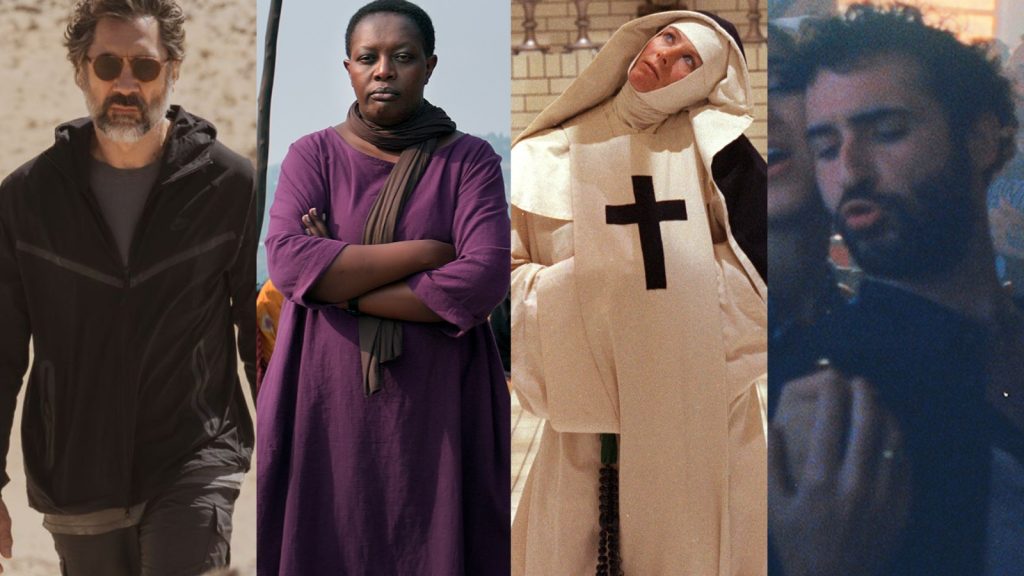
The big breakout hit of Cannes this year, writer-director-star Jordan Firstman — a.k.a. the celebrity stylist Charlie from I Love L.A. — played in the Un Certain Regard section early on in the fest and quickly established its triple-threat creator as the belle of this year’s proverbial ball. It was a much-needed breath of fresh air, which was ironic given that its plot wasn’t exactly a fresh one: A party organizer (Firstman) still leading that dusk-to-dawn lifestyle in his thirties is forced to grow TF up when he discovers that a drug-fueled night a decade ago has led to him accidentally being a dad. Surprisingly, the manchild bonds with his son (Reggie Absolom) and discovers he’s actually a good guardian, before legal issues complicate matters. Some compared this to a queer-NYC-club culture take on Kramer vs. Kramer, which isn’t entirely inaccurate. But it’s not where you’re going with this so much as how Firstman gets you there, and it was no surprise that A24 won a massive five-way bidding war to nab this.
‘Fatherland’
Image Credit: Agata Grzybowska/Mubi
In 1949, celebrated author Thomas Mann (Hanns Zischler) returned to his native — and now bifurcated — Germany to receive a prize and give a lecture on his hero, Johann Wolfgang von Goethe. He brought along his daughter, Erika (Sandra Hüller), as a traveling companion. The times, they have a-changed for this postwar country, however, and the exiled writer suddenly finds himself a stranger in a strange, highly conflicted land. Polish filmmaker Pawel Palikowski (Cold War) delivers an absolute banger of a B&W road movie that doubles as both a father-daughter drama. It’s also a stark reminder that you can never truly go home again, and that history is capable of rendering null and void the culture you once held near and dear. And it’s yet another Exhibit A that Hüller, fresh off of proving she’s a primo interpreter of Harry Styles catalog, is one of the best actors working today. Stunning, from start to finish.
‘Ken Russell’s The Devils: The Director’s Cut’
The Cannes Classics section has always been great for cinephiles wanting to catch up with new restorations of older films and/or rare screenings of vintage obscurities. But this year’s sidebar also gave the festival one of the most sought after tickets on the Croisette — a single screening of the complete version of Ken Russell’s blasphemous 1971 masterpiece about a 17th century priest (Oliver Reed, at his most mustachioed) who gets the local convent in Loudun hot and bothered. His popularity and influence over the city also ends up in getting the holy man in hot water with the notorious Cardinal Richlieu, and history can attest that things do not end well. To say this movie has attracted controversy is a little like noting that King Kong was a plus-sized simian — it was heavily edited upon its release and was outright banned in numerous countries. Critic and superfan Mark Kermode managed to track down several key missing scenes, including one involving an orgy and a lifesized model of Jesus, after years of detective work, and presented an official “director’s cut” once in the UK in 2002. A new restoration courtesy of the Warners’ offshoot Clockwork will now hit theaters in the fall, and its premiere at the fest proved that Russell’s over-the-top attack on the too-cozy relationship between church and state has only become more pertinent. Bonus points for Vanessa Redgrave at her most unhinged.
‘Maverick: The Epic Adventures of David Lean’
There’s something to be said for painting a portrait of a film artist in a way that favors both the work and the life — doing it in a way that is not hagiographic, DVD-extras formulaic or by-the-numbers rote is harder than it looks, people — and Barnaby Thompson’s doc on David Lean is a great example of how to do it right. His look back at the man behind of Lawrence of Arabia and Doctor Zhivago expertly traces the filmmaker’s arc from in-demand editor to working British director and expert Dickens adapter (Great Expectations, Oliver Twist) to an Oscar-winning maestro of epic moviemaking. It’s also not afraid to get personal, catty (there’s archival footage of Lean telling an anecdote about the National Society of Film Critics that will make you permanently cringe), and show its subject in a highly unflattering light. You walk away with a fine sense of both who he was and why so many of the big-name talking heads testify to his extraordinary influence. Almost importantly: It will make you want to revisit all of his work, even the misses, ASAP.
‘Minotaur’
A remake of Claude Chabrol’s La Femme Infidele set in Putin’s Russia, the latest from director Andrey Zvyagintsev (Leviathan, Loveless) keeps the basics of its source material intact: A businessman (Dmitriy Mazurov) suspects his wife (Iris Lebedeva) is having an affair. A confrontation and a cover-up ensue. But hovering over this potboiler is the specter of the war in Ukraine, which keeps making its presence known in small but telling details: a recruitment billboard in the background here, a quick glimpse of a wounded soldier on the street there. And we eventually begin to understand that in a society that’s been completely corrupted from the top down and has lost its moral compass, a murder is no big existential deal. The backstory alone behind Zvyagintsev’s return to moviemaking is a compelling drama on its own, and his tale of crime and (a lack of) punishment deservedly left with the runner-up Grand Prix prize.
‘Paper Tiger’
Image Credit: Neon
Cannes loves James Gray — five of his previous films had premiered in competition at the festival — and the Armageddon Time filmmaker once again delivered a tale of crime and the city that doubled as a sociological time capsule. It’s 1986, and Irwin Pearl (Miles Teller) wants more for his wife (Scarlett Johansson) and kids than just a comfortable middle-class life in Queens. Enter his cocky ex-cop brother, Gary (Adam Driver), who thinks he has the solution to his kin’s problems: a lucrative opportunity involving the Russian Mob, the Gowanus Canal, and a loose sense of what constitutes legal business practices. Soon, things fall apart, the center cannot hold, etc. It’s the sort of gritty, moody, character-driven thriller that Gray cut his teeth on back in the 1990s, as well as a highly personal look at what happens when you chase the American Dream and instead wake up in a capitalistic nightmare.
‘Teenage Sex and Death at Camp Miasma’
Image Credit: Ryan Plummer/MUBI
Jane Schoenbrun made a quantum leap between their debut We’re All Going to the World’s Fair (2021) and their dream-like follow-up I Saw the TV Glow (2024); they’ve now leveled up once again with this riff on vintage slasher flicks, as a young filmmaker (Hannah Einbinder) is tasked with reviving a dormant Friday the 13th-style franchise from the 1980s. Her goal is to recruit the reclusive star (Gillian Anderson) of the original movies for her “requel.” From there, the whole shebang turns into a mix of homage to yesteryear’s trash and a celebration of sexual liberation, living your truth and embracing your kinks. Schoenbrun, who identifies as trans and nonbinary, has said that the story is a parable for learning to love sex after transitioning, but it also works as an ode to the power that movies, even the questionable and/or politically incorrect ones, have over us in terms of erotic fixation. Plus its funny as hell, features extraordinary performances from its two leads, and should do for KFC dipping sauces what 9 1/2 Weeks did for goopy cherries.



This Film on Magic Trick Theft Feels Like a High-Stakes Thriller
Stealing Magic delves into a cat-and-mouse game involving illusionists who travel the world...
Tyra Banks Sues Netflix Over ‘America’s Next Top Model’ Docuseries
Tyra Banks has filed a lawsuit against Netflix, claiming she was defamed in the recent...
Justin Baldoni to Pay Blake Lively’s Legal Fees in Final Legal Ruling
A judge has ordered Justin Baldoni to pay Blake Lively‘s legal fees, though she is...
‘Off Campus’ Warns Anyone Harassing Cast ‘Will Be Removed’ From Accounts
As the series prepares for its second season, Off Campus issued a message for those targeting...